


For the fourth installment of “ReseArchi,” a series in which our staff explore outstanding design found in everyday architecture and share stories shaped by their insights and reflections, we introduce the Takarazuka Arts Center in Hyogo Prefecture.
Website: https://takarazuka-arts-center.jp
Design: Joint Venture (Tohata Architects & Engineers / The Architectural & Regional Planning Institute / E-DESIGN)
Construction: Kajima Corporation
Completion: June 2020
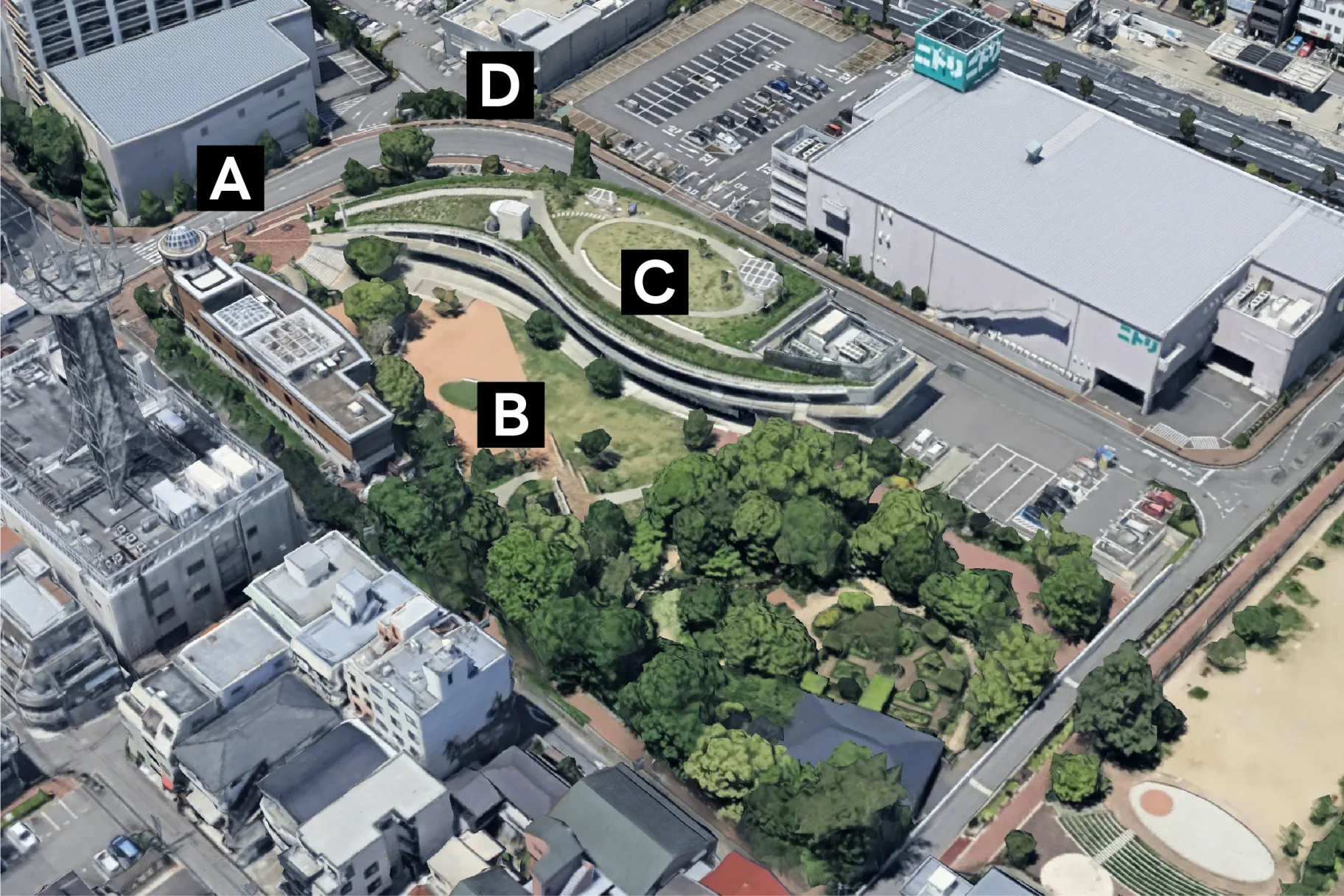
A “gentle, mound-like hill” created beside the Osamu Tezuka Manga Museum.
Built along a gradual slope, this cultural facility skillfully makes use of the site’s changes in elevation. Facing the museum, a valley-like plaza has been created, generating vibrancy in the surrounding area.

Although access from the road was closed at the time, children were still running back and forth between the rooftop garden and the plaza. It was a scene that could truly be described as a reward for the architects.
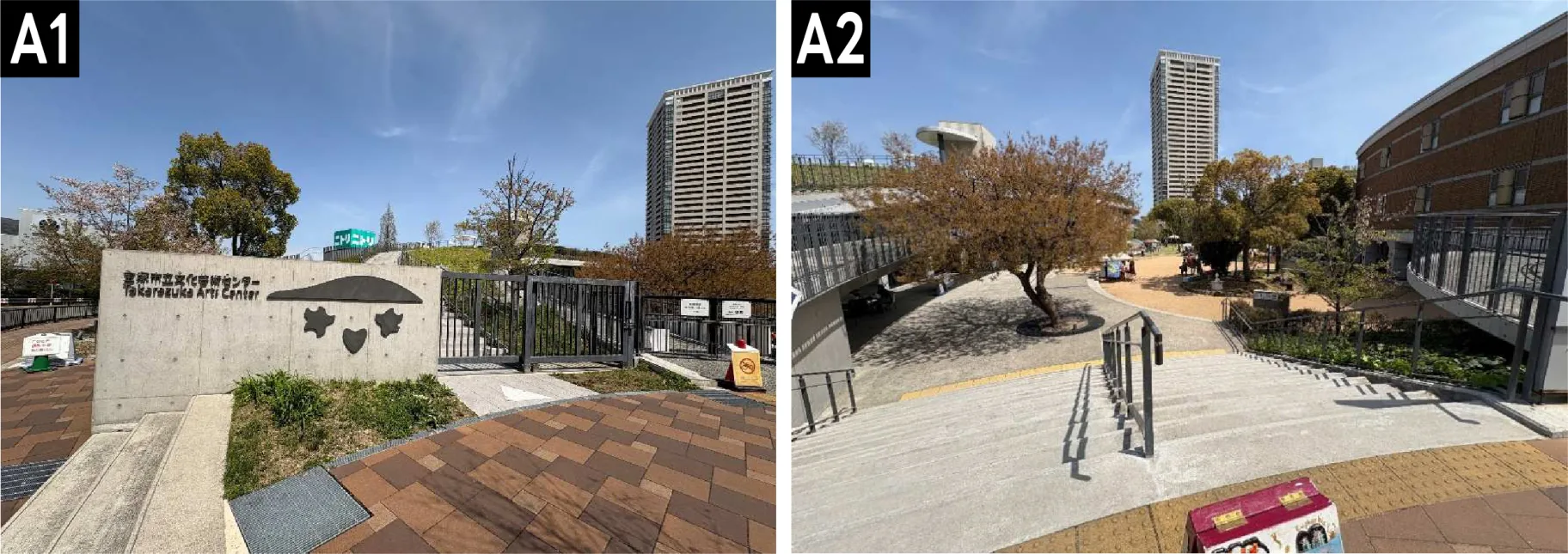
A1 The stairs lead up to the rooftop garden, while the second floor on the slope side connects to a balcony.
A2 Descending the stairs from the road brings you to the building entrance and the plaza’s ground level. To the right stands the Osamu Tezuka Manga Museum.
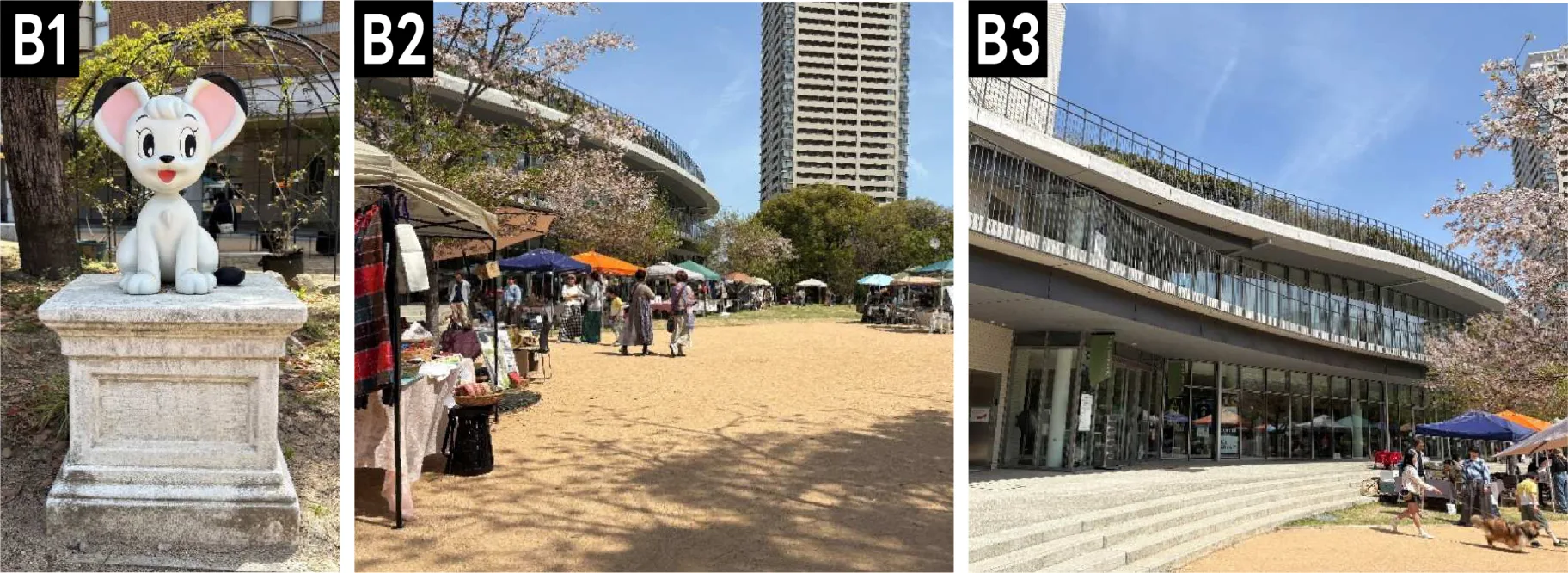
B1 Statue of young Leo.
B2 A market is held in the plaza.
B3 The steps also function as bench seating for resting and dining.
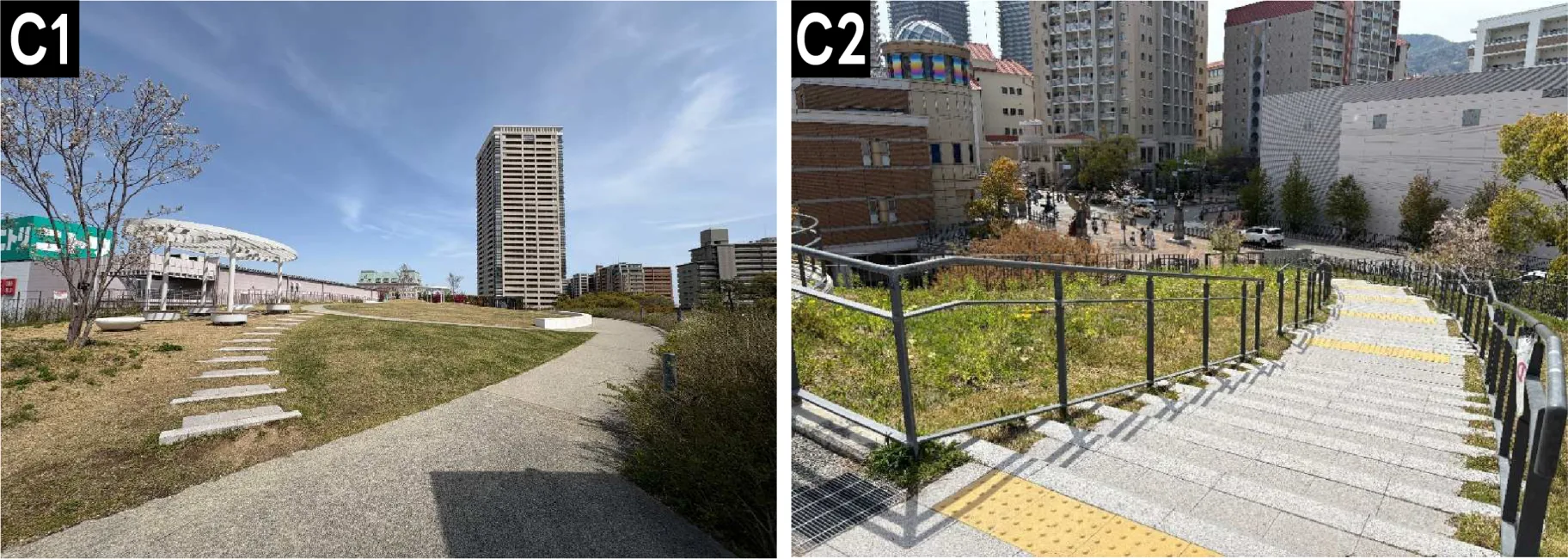
C1 The rooftop garden is shaped as a gentle mound, composed of a looping pathway and a lawn plaza.
C2 Stairs subtly connect the road to the rooftop garden.
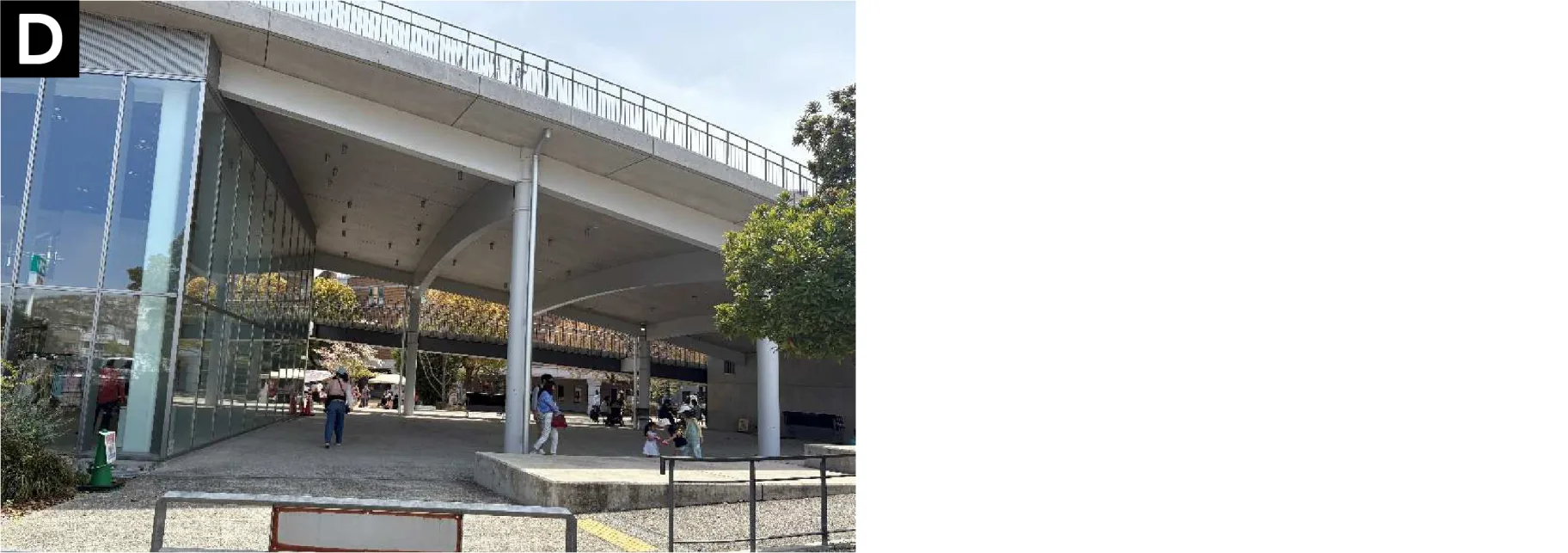
D As you proceed along the slope, the road and the building merge seamlessly. Ahead, the lively atmosphere of the plaza comes into view.
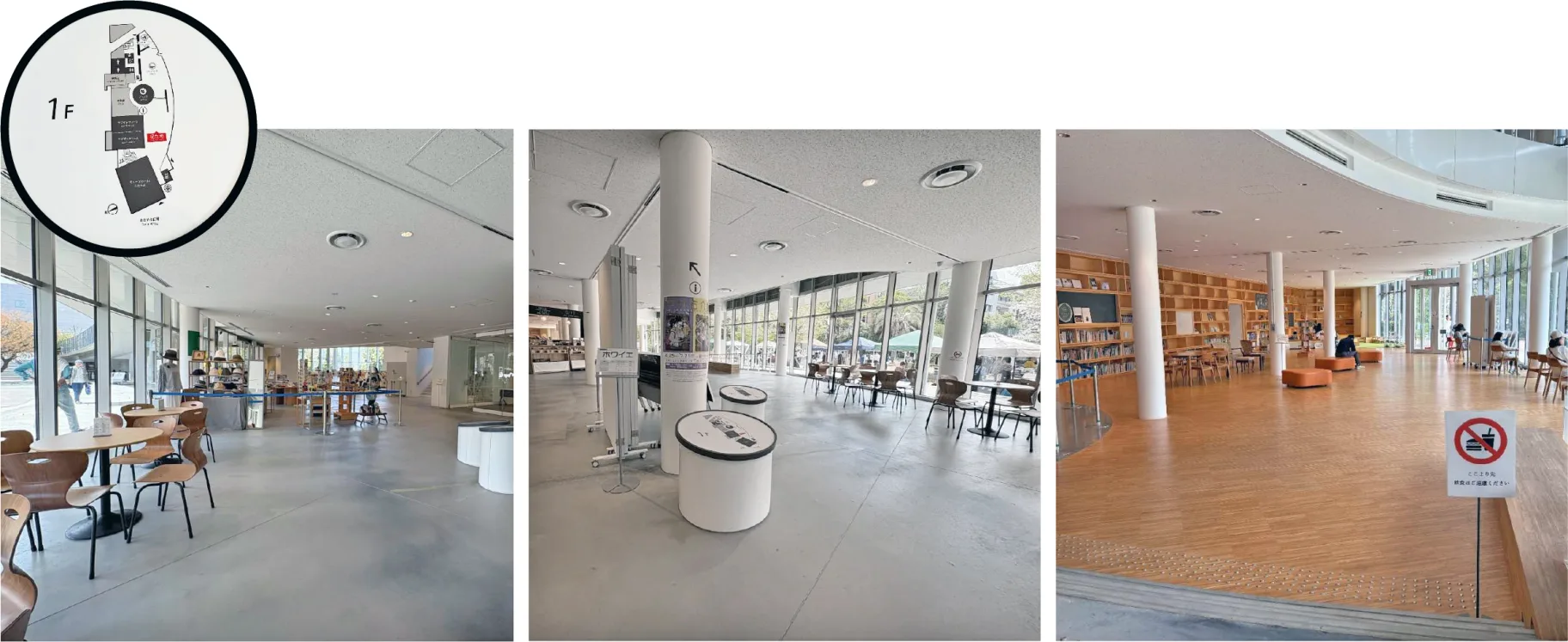
1F
Small items by local creators were being sold beside the entrance. The glass-enclosed space visible at the back is the Cube Hall, where baby clothing was on display and for sale.
Tables were arranged in the foyer, which can also be divided using movable partitions. The second floor houses a paid gallery, where an exhibition by Yusuke Nakamura was being held.
Beyond the foyer lies a library set a few steps lower. Designed as an atrium space, it offers an open and airy atmosphere.
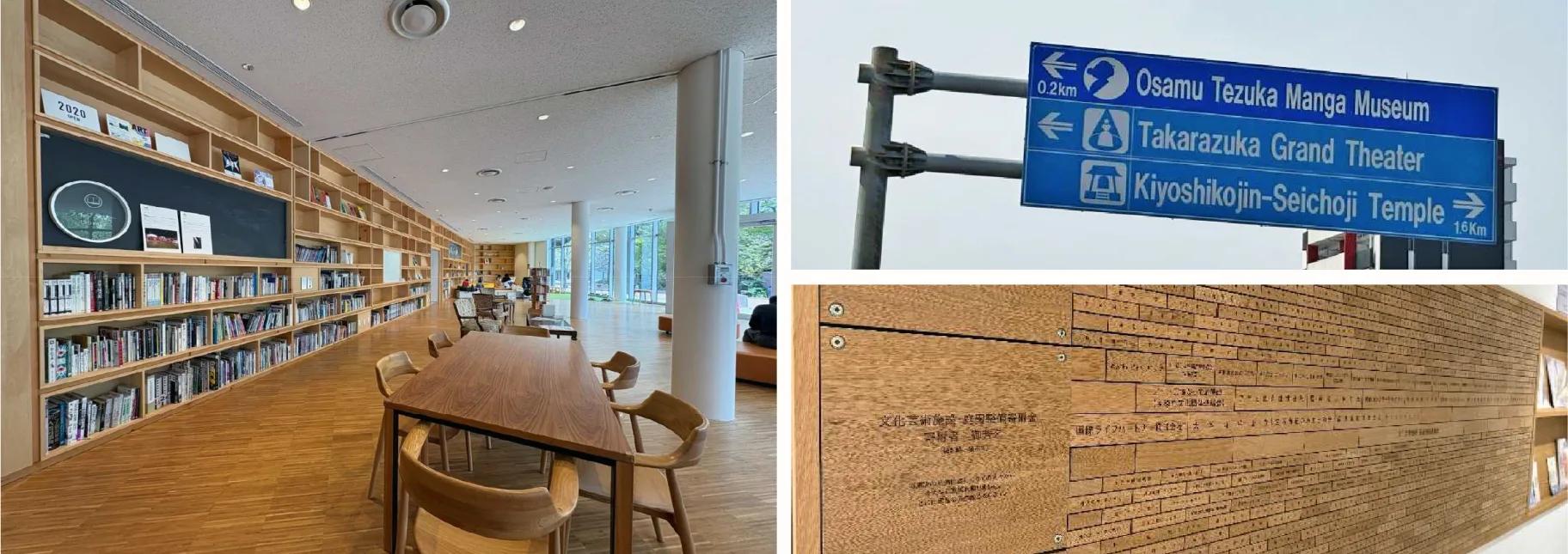
Rear of 1F / Others
The children’s corner at the back was also lively.
The road signage features a global design, highlighted by charming Tezuka-inspired icons.
The names of donors are displayed within the facility.
Making use of the gentle topography, the facility vertically connects the plaza, rooftop garden, and interior spaces, creating natural circulation and places for people to stay within the city.
The sight of children playing and the vibrancy of the plaza convey how deeply the architecture has taken root in the community.
Through ReseArchi, we will continue to explore the appeal and design ingenuity found in everyday architecture.
